Understanding Ski Flex Profiles – What Does “Medium Flex” Actually Mean?
If you’ve ever browsed ski specs online, you’ve probably run into terms like soft flex, medium plus, or stiff all-mountain. But what do those really mean?
As a ski builder, I’ve been experimenting with flex profiles in my own builds — and decided to measure actual stiffness numerically to compare to vague terms like medium-plus. Spoiler: the “medium” label isn’t very precise. Here’s what I found.
How Flex is Measured – N/cm vs Vibes
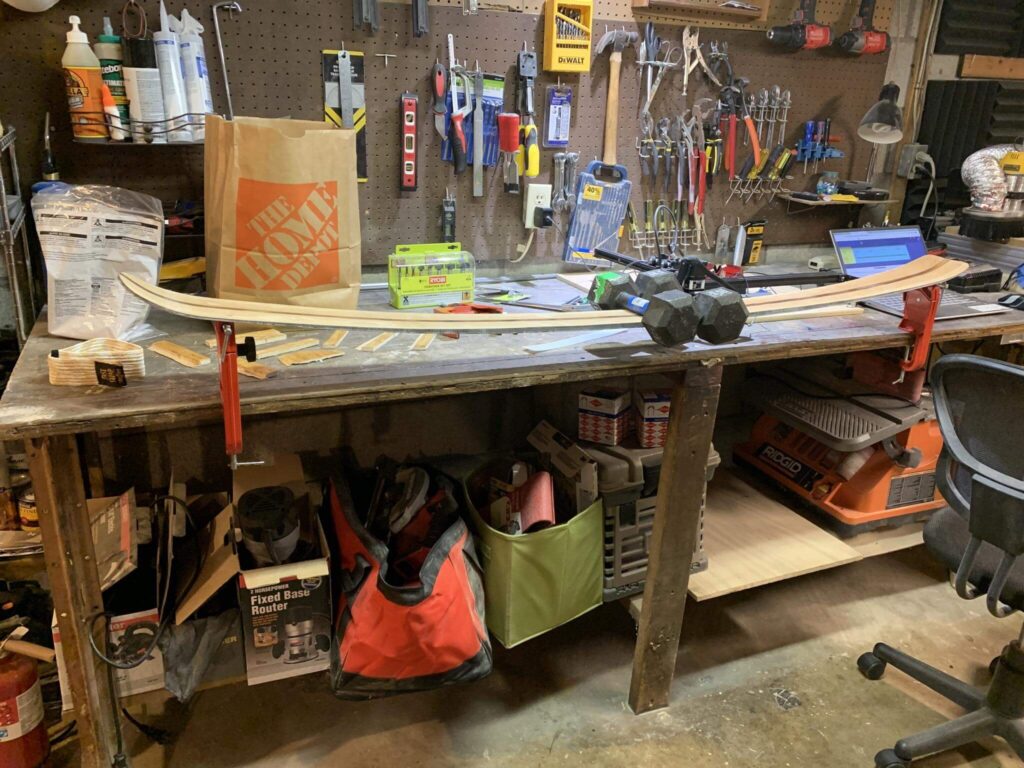
When ski manufacturers say “medium flex,” they’re usually describing how a ski feels rather than how it performs on a test bench. So I set up a simple deflection test rig: support the tip and tail of a ski and apply a centered point load. Measure how far it flexes, and use that to calculate stiffness in Newtons per centimeter (N/cm).
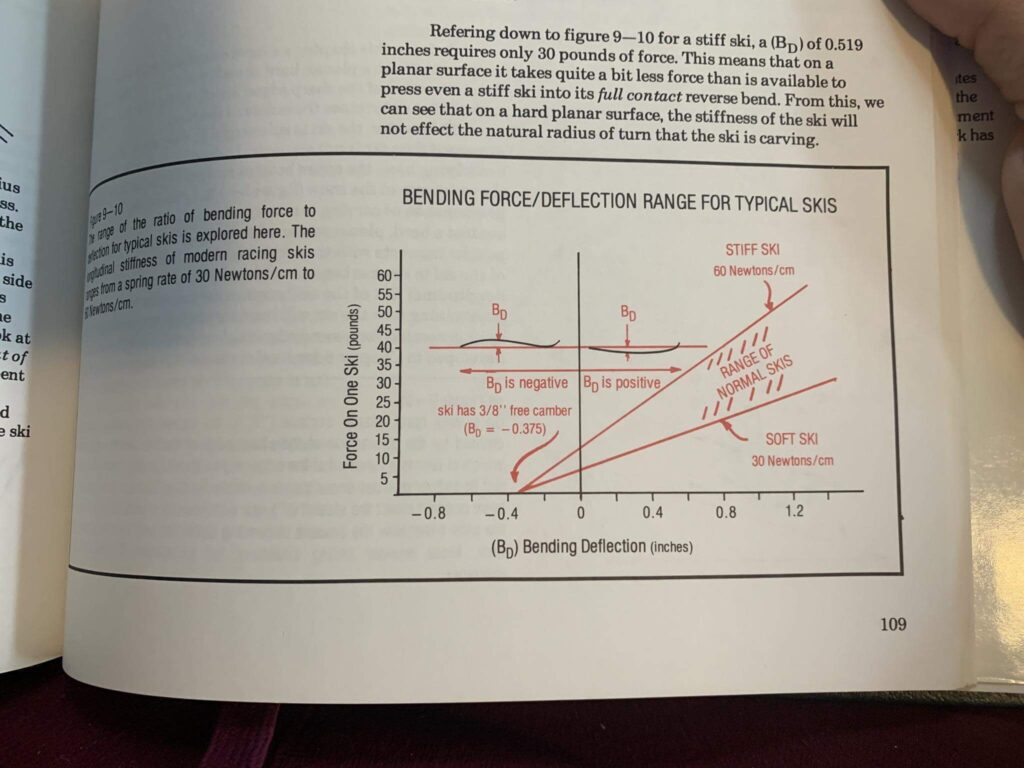
This mirrors the stiffness reference in Skiing Mechanics by John Howe, which lists 30–60 N/cm as typical for race skis:
Factory Skis I Measured
Here are the deflection stiffness values I measured on some of the production skis I had lying around:
| Ski | Length | Measured Flex |
|---|---|---|
| Rossignol Experience 83 | 168 cm | 40.0 N/cm |
| Head Mojo 80 (Jon Olsson) | 170 cm | 39.2 N/cm |
| Fischer RC4 WC SL (Slalom) | 165 cm | 47.7 N/cm |
| Fischer RC4 WC GS (GS) | 180 cm | 39.2 N/cm |
| Volkl Supersport | 154 cm | 49.2 N/cm |
| Rossignol Temptation 76 (Women’s) | 146 cm | 38.1 N/cm |
My Skis – Flex Testing So Far
I’ve now measured flex on several of my custom builds, and the results have been surprising — sometimes softer or stiffer than I expected based on layup and materials.
Here’s a breakdown of the skis I’ve built and their measured stiffness:
| Build | Core Thickness | Fiberglass | Carbon | Measured Flex |
|---|---|---|---|---|
| Pair #1 (Grey Oak, Carver) | 2/10/2 mm | 22 oz top/bottom | 1″ 373 gsm carbon top & bottom | 66.7 N/cm |
| Pair #2 (Rosewood) | 2/9/2 mm | 20 oz top/bottom | 1″ 373 gsm carbon bottom + “X” top | 31.7 N/cm |
| Pair #3 (Striped Topsheet) | 2/8/2 mm | 20 oz top/bottom | 1″ 373 gsm carbon bottom | 22.0 N/cm |
That third pair came out way softer than expected. I had calculated a higher value, but real-world stiffness came in at just 22 N/cm — definitely on the soft side. Still, it might work well for a lighter, beginner-to-intermediate skier.
Current Build – Predicted vs Reality (To Be Confirmed)
I’ve got a 187 cm all-mountain ski in the press now, using:
- 20 oz fiberglass top & bottom
- 2.5/11.5/2.5 mm core
- No carbon
- Poplar + maple core layup
My predicted stiffness for this build is 60.7 N/cm, but given how far off past estimates have been, I’ll wait to test it before claiming a number.
What the Numbers Actually Mean
Here’s a rough guide from my measurements and other ski builder resources:
| Flex Description | Typical Range (N/cm) |
|---|---|
| Ultra Soft | < 25 N/cm |
| Soft | 25–35 N/cm |
| Medium | 35–45 N/cm |
| Medium/Stiff | 45–55 N/cm |
| Race Stiff | 55+ N/cm |
But again, this varies depending on:
- Rider weight
- Ski length and purpose
- Skier Preference
Why It Matters for Ski Builders and Closing Thoughts
Getting flex right can make or break a build.
A ski that’s too stiff can feel dead, unforgiving, or twitchy. A ski that’s too soft might be fun in low-angle powder but fold up under pressure at speed.
Having real-world deflection values helps calibrate your layup approach, and for me, comparing numbers across skis I’ve made (and liked or disliked) has made it easier to dial things in.
I think the deflection range is intended to be more of a rule of thumb / engineering check than a rule to live/die by. I’d be willing to bet there are plenty of great skis outside the range.